
About
Thousands of inputs.
One catalog.
Long-form podcasts. PubMed. The newest biohacking gadgets, promising SF health startups, and the X feeds of scientists, physicians, and people who care and strive to become unstoppable.
We go deep into everything — you see only what holds up.
How we research
Three signals decide what gets onto the catalog. Any single one is interesting; two is a candidate; all three is usually a yes.
Editorial weight
Long-form podcasts, books, and interviews from people who do their own homework. A two-hour Huberman Lab episode on cold exposure beats a sixty-second clip on Instagram, every time.
Research depth
PubMed, Examine, peer-reviewed journals. Where a claim meets a methodology — not everything we list has clinical data, but if a category does, we want to know what the data actually says.
Cult adoption
When entrepreneurs, athletes, and physicians keep reaching for the same tool over years, the pattern is the signal. Repeat advocacy is harder to fake than a single review.
Whose work shapes the catalog
The people whose work most consistently reshapes what we recommend. Four lanes — credentials, practice, performance, translation. The list is short on purpose.
Scientists & Physicians
Peer-reviewed credentials, primary literature, and the patience to publish their notes.
Andrew Huberman
Neuroscientist · Stanford · Huberman Lab
Long-form interviews on sleep, dopamine, light, breath. Where most science communicators stop at the headline, Huberman publishes the protocol.
Rhonda Patrick
Biochemist · FoundMyFitness
Reads more PubMed in a week than most people do in a year. Sauna, omega-3s, time-restricted eating — she put the citations on the table first.
David Sinclair
Geneticist · Harvard · Lifespan
Aging is a treatable condition, on his read. The Lifespan podcast translates a lab full of mouse data into protocols an interested reader can follow.
Matthew Walker
Sleep scientist · UC Berkeley · Why We Sleep
The reason “sleep is non-negotiable” became cultural common sense. We weight anything sleep-adjacent against his work first.
Mark Hyman
Functional medicine · Cleveland Clinic · The Doctor's Pharmacy
Bridges integrative practice and conventional medicine without the supplement-aisle excess. Strong on food, gut health, and metabolic markers.
Layne Norton
PhD biochemistry · BioLayne
The plain-spoken science police of fitness. Picks apart bad nutrition studies in real time and refuses to let dogma replace data.
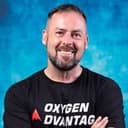
Patrick McKeown
Breathing instructor · Oxygen Advantage · Buteyko Method
Brought clinical breathwork — nasal breathing, CO₂ tolerance, sleep-tape protocols — out of fringe wellness and into pro athlete locker rooms.
Entrepreneurs & Health Enthusiasts
Founders, builders, and self-experimenters running protocols on themselves in public.
Ben Greenfield
Biohacker · performance · longevity
On the experimental edge of fitness, recovery, and longevity. We don't take every protocol at face value — but the signal-to-noise from his lab is unusually high.
Bryan Johnson
Don't Die · Blueprint
Running the most documented self-experiment in modern longevity. Whether or not you'd live like him, the data he publishes is impossible to ignore.
Pieter Levels
Indie hacker · @levelsio
Builds public, lifts heavy, sleeps well. A founder's take on what a healthy operating system looks like when you're shipping software at speed.
Jack Dorsey
Bluesky / Block · entrepreneur
Sauna, cold plunge, fasting, walking — built into a CEO schedule for over a decade. The original silicon-valley adopter of “sleep first.”
Jack Smith
Entrepreneur · @_jacksmith
Posts unusually candid notes on supplements, protocols, and what's actually working day to day. Less curated, more lived-in.
Tim Ferriss
Author · The Tim Ferriss Show
Two decades of interviewing the people who actually do the work, then trying it himself. The 4-Hour Body kicked the door open on this whole catalog.
Naval Ravikant
AngelList · investor · philosopher
On the long-form architecture of a good life. His threads on sleep, walking, reading, and silence are referenced more than most peer-reviewed papers in this space.
Aubrey Marcus
Onnit founder · Total Human Optimization
Built one of the first credible biohacking brands in the U.S., now writes openly about psychedelics, training, and recovery. Practitioner-first.
Wim Hof
Iceman · breathing & cold exposure
The reason cold plunge tubs sit in suburban garages. His method has cleared enough peer-reviewed scrutiny to make the protocols worth taking seriously.
Tom Bilyeu
Impact Theory · Quest Nutrition co-founder
Long-form interviews on mind, body, and what it actually takes to change either. Approaches health as a problem of mental architecture as much as biology.
Joe Rogan
The Joe Rogan Experience
Whatever you make of the rest of his catalog, the health and fitness conversations move the needle in a way no other podcast does. Where most of these names get their first big audience.
Chris Williamson
Modern Wisdom
Long-form interviews with the smartest operators in performance, longevity, and psychology. Picks guests with unusually good taste — half this list shows up on his show first.
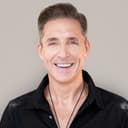
Dave Asprey
Bulletproof founder · biohacker
Polarising, but hard to deny the influence — he turned “biohacking” into a household word. Worth reading skeptically and selectively.
Mark Bell
Sling Shot founder · Power Project podcast
Powerlifter turned strength entrepreneur. Decades on the platform translated into honest takes on training, recovery, and what actually keeps people lifting into their fifties and beyond.
Authors & Educators
The long arc — habit, food, attention. The work that compounds.
Jocko Willink
Author · Extreme Ownership · Jocko Podcast
Discipline equals freedom — and the daily wake-up photo that made it a movement. The reference on training, sleep, and operating under stress, taught through books and the longest-running podcast in the genre.
James Clear
Author · Atomic Habits
On the architecture of behavior change. Most of what works in this catalog only works if you can actually do it on Tuesday.
Michael Pollan
Author · The Omnivore's Dilemma · How to Change Your Mind
Eat food, mostly plants, not too much. Then a quietly serious treatment of psychedelics as therapeutic tools. Few writers shape culture like this.
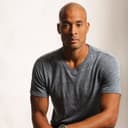
David Goggins
Retired SEAL · Author · Can't Hurt Me
Mental toughness without the gloss. Trains, runs, and writes from the position that comfort is the enemy — a useful counterweight to most wellness copy.

James Nestor
Journalist · Author · Breath
Took breathing — the most boring biological function — and wrote the book that got an entire field of practitioners back on the radar. Required reading.
Gavi Health Sources
Where the evidence comes from. Linked directly on every product page when a paper, episode, or post informs the pick.
PubMed
The default for finding peer-reviewed studies. Every Research Backed badge starts here. We follow the citation graph backwards until we hit the methods.
Google Scholar
Where citation counts and full-text PDFs of older papers live. Useful for tracking how a finding has held up — or not — over the decade after publication.
Examine
Independent supplement and nutrition research aggregator. No advertising, no industry funding. The first stop when a category has a lot of weak studies and we need an honest summary.
ConsumerLab
Independent supplement testing — purity, potency, contamination. Where the catalog goes when the difference between brands is whether the bottle actually contains what the label claims.
Labdoor
Lab tests of consumer supplements scored on quality and value. Faster signal than ConsumerLab on commodity categories — protein powders, omega-3s, multivitamins.
Nature
Top-tier journal. When something lands in Nature, the field is taking it seriously. We treat the press releases skeptically and the raw papers carefully.
Science
The other top-tier journal. Same weighting as Nature — methodology over headline, replication over novelty.
The Lancet
Clinical medicine's reference journal. Strong on intervention trials and longitudinal cohort data — exactly what we need to evaluate longevity claims.
Cell
Mechanism papers — how cellular biology actually works. Useful when a supplement or protocol's claim depends on a specific pathway.
NEJM
The New England Journal of Medicine. Practitioner-facing — what physicians read. When something is in NEJM, it's already shaping clinical practice.
Huberman Lab
Two-hour episodes that index a topic from the literature down to a usable protocol. The references list at the bottom of every episode is where the actual work lives.
FoundMyFitness
Rhonda Patrick's research database. Episodes are dense, cited, and updated — closest thing to a continuously-revised textbook on nutrition and longevity.
The Tim Ferriss Show
Long-form interviews with the people who actually do the work. Less mechanistic than the others; richer on practice — what people actually do, day after day.
Modern Wisdom
Chris Williamson's interview show. Picks guests with unusually good taste and lets them go long — half the names on this list show up there first.
X (formerly Twitter)
Where new mechanisms, protocols, and one-off observations show up first — months before they reach a podcast and years before they hit a journal review. We follow every voice above.
Badges
Three badges, all earned. We resist adding more — every extra badge dilutes the signal of the others.
The category — supplement, sensor, protocol — has at least three independent peer-reviewed studies behind it, typically PubMed-indexed trials or systematic reviews. Not a guarantee that the specific product was tested; a signal that the underlying mechanism is real.
Sustained mention across the voices we read for at least twelve months. Not marketing volume — repeat advocacy from people we trust to do their own work.
Specifically recommended by a voice in our list — on a podcast, in a long-form post, in a book. We link the source directly so you can hear it in their own words.
What we track
Behind every product page is structured data we maintain over time.
Sources
Each Research Backed product links to the clinical trials, journal papers, podcasts or longform articles that informed our choice. Click and read — we want you to second-guess us.
Revisions
Edit history is tracked internally; we're working on surfacing the “updated on” date publicly so you can tell at a glance when each entry was last looked at.
Voice mentions
Every time a voice on our list recommends a product — on a podcast, in a long-form post, in a book — we attach the source to the product page. That signal feeds the Cult Pick and As Seen On badges, and links you straight back to the moment the recommendation was made.
Specifications
Battery life, sensors, materials, compatibility — the specs that survive cross-checking against the manufacturer page and independent reviews. We strip out marketing language; what you see is what the product actually does.
Stock & availability
An automated check tells us when a product goes out of stock or quietly becomes a different SKU. We pull or update entries that change out from under us.
Price history
Every change to a product's price gets a row in our database. Comparison and detail pages can show the 90-day low and high, so you know whether what you're looking at is a deal.
Link health
An automated check runs against every affiliate link so you don't click into a 404 or a discontinued product page.
Affiliate disclosure
Some product links are affiliate links — when you click through and buy, we may earn a small commission, at no extra cost to you. This is how the catalog stays free and ad-free. It does not influence which products we list, or which earn badges.
If a brand offers us better commission to feature them more prominently, we say no. The catalog answers to readers, not to merchants.
Creator

Created by Mac Jablonski. Founder, builder, health enthusiast.
A long stretch of trying to optimize my own health taught me that the right tools, in the right order, can compound into a massive difference in both physical and mental health. Gavi Health is the catalog I wish had existed then — built out of an internal calling to hand other people the things that worked for me, or that come recommended by the people and publications whose work I trust to do the science, without making them wade through a decade of trial and error to find them.
Gavi Health exists to spread what works.
Get in touch
Spotted something we got wrong? A study we missed, a price that’s out of date, a product that should be on the catalog (or shouldn’t)?
Email hello@gavihealth.com. We read everything.